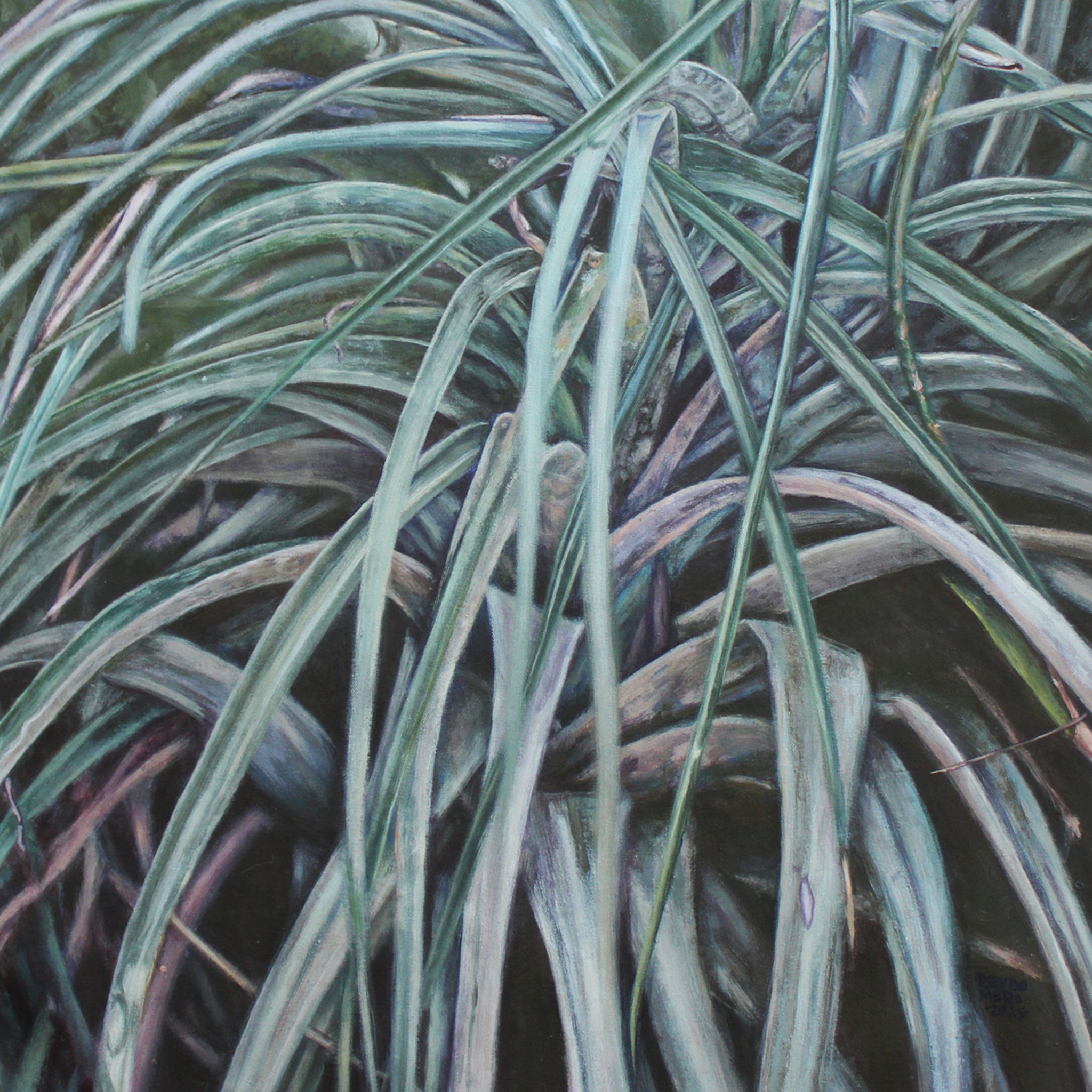
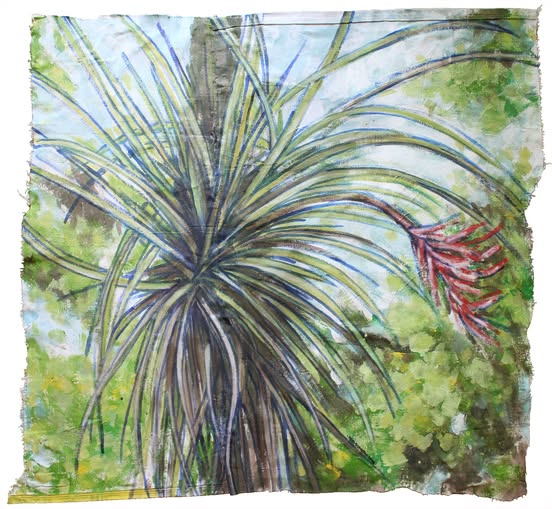
Puerto Rican Women In Arts, an exhibition showcasing 200 Puerto Rican women artists, opened on March 7 at El Schomburg in Chicago. It is the largest exhibition to date dedicated exclusively to showcasing Puerto Rican women artists, and it was no easy feat. However, it was a challenge that Alexis Figueroa, founder of Trailer Park Projects, decided to take on.
Not only was it the first major exhibition of its kind in over a decade, but it might also be the most extensive ever presented. For Figueroa, a long-time Chicago resident and arts advocate, especially within the Puerto Rican community of Humboldt Park, bringing this exhibition to life was personal and urgent. What began as a simple idea quickly grew, gaining momentum each day.
The idea came from a conversation between Figueroa and his friend, writer and art collector Anjanette Delgado, whose private collection focuses on women artists. During their chat, they both expressed frustration at how difficult it still is to find exhibitions that focus on or even include women artists. That conversation led Figueroa to seriously reflect on the shows he had curated in the past. While he had invited both men and women to participate, the number of men who responded, showed up, and followed through was overwhelmingly higher than women. Over time, this created exhibitions that were male-dominated, not intentionally, but by default. It was a pattern he knew needed to change.

Determined to shift the balance, Figueroa made a decision: he would organize a show exclusively for Puerto Rican women artists. At first, he pictured a small curated show with maybe 30 or 40 participants. The venue came easily; El Schomburg, a community space he had worked with before. It was a natural fit, and together with gallery director Brenda Torres, they teamed up to bring the idea to life.
With the space secured, the next big challenge was funding. Figueroa made the bold decision to fund the entire exhibition himself. That meant covering everything: transport, materials, installation, and unexpected costs, without any outside funding or sponsors. To manage the financial risk, he set some guidelines: all works had to be valued between $50 and $150. This wasn’t meant to reflect the artistic value of the pieces, but rather a practical way to ensure he could personally cover any damage that might happen during handling or shipping.
Logistics came next. To help artists living in Puerto Rico, Figueroa offered to personally transport the artworks. This meant artists wouldn’t have to pay for shipping, but it also came with size restrictions: no piece could be larger than 11″ × 14″, and no three-dimensional works would be accepted. These rules were based on what could safely fit in his suitcase. The system might have seemed unconventional, but it let him carry many works on a commercial flight, streamlining the process and building trust with the artists.

The call for submissions started with a simple email to the artists he already knew. He expected maybe 30 or 40 responses, enough to fill a single room. But the response blew him away: more artists than expected replied with immediate enthusiasm. Energized by the momentum, he expanded the outreach, posting on social media, sending follow-up emails, and directly reaching out to artists he discovered through research. The replies kept coming, and the number of participants grew by the day. Throughout the process, he exchanged more than 2,000 emails and messages, and eventually invited over 350 women to participate.
Figueroa traveled to Puerto Rico and organized a two-day window for artwork drop-off. With help from Bryan Torres Arana, owner of Café Tostado, he set up a temporary receiving station at the café. Torres let Figueroa use the café space and even offered his office after hours. Artists showed up with their work, many meeting Figueroa for the first time, creating a space of exchange, connection, and affirmation. By the end of the drop-off period, Figueroa had picked up 150 works in person. He didn’t close the submission process to meet a set number, but rather out of concern that there wouldn’t be enough space to display all the work. The final count: 200 works by 200 individual artists, happened naturally because of the overwhelming interest and need for a show like this.

Back in Chicago, it was time to install the show. Figueroa thought about different ways to organize the artwork by birth year or alphabetical order, but ultimately chose to group them by medium. The final show was broken into sections: collage, drawing, painting, photography, printmaking, textiles, and mixed media. Installation took about a day and a half. The result was a smooth and intuitive experience that let visitors explore each medium as a lens into contemporary Puerto Rican art by women from different generations.
Because of the volume of work, traditional wall labels weren’t an option. Instead, each piece got a number that matched a printed reference sheet with QR codes. Visitors could scan the code for any piece they liked and be taken directly to the artist’s website or social media. It was a modern solution that helped connect viewers to the artists beyond the gallery walls.
From idea to opening, the whole process took just three weeks. In that short time, Figueroa secured the venue, gathered works from across Puerto Rico and the diaspora, arranged transportation, curated, and installed the show. It was an intense effort fueled by determination and community support, like that of Jesús Díaz, who designed the exhibition poster.
Opening night on March 7 brought in over 400 attendees. Seven artists flew in from Puerto Rico, and twelve already lived in Chicago. The vibe was electric. The show received widespread media attention, including three TV segments and a panel discussion the next day on women in the arts. Activist Oscar López Rivera, despite health issues, gave a moving speech, his first public appearance in months.

During the run of the exhibition, over 120 pieces were sold, and many artists gained new followers, connections, and collectors. Figueroa stayed involved the entire time, offering weekly tours, livestreaming on social media, and personally answering questions from the public. The show was extended through April 28 to align with EXPO CHICAGO, giving more people and collectors a chance to visit.
Chicago was just the beginning. Puerto Rican Women in Arts opened its second edition on June 5, 2025, at La Liga de Arte in San Juan, Puerto Rico. This version included the same group of artists, plus one more, bringing the total to 201—some with the same pieces, others with new or different work. The show continued its mission to give visibility, voice, and value to Puerto Rican women artists, on the island and beyond. It featured artist talks and guided tours led by Figueroa himself. The final tour happened on the afternoon of July 9, and the show officially closed on July 11, 2025.
The exhibition was dedicated to the memory of recently passed artists Zilia Sánchez, Bárbara Díaz-Tapia, SKE, and John Belk—a tribute to their lasting influence and contributions to the art world.